This article is found at nytimes.com.
The Editorial Board at the New York Times wrote an article about the treacherous conditions of New York state prisons. The Justice Department pulled the state of New York into court because of the brutality towards the prisoners at the Rikers Island jail complex. The guards are becoming so horrible towards the inmates because they know that the union will protect their job and that district attorneys wouldn't prosecute them. The authors believe that the only way to fix this problem is to get higher-up political figures involved even if there is so much pressure out on them. They are angry that this problem hasn't gained attention from the political leaders yet. One way that the authors convey their message is their use of strong vocabulary words. By using the words "infest," "sprawling," and "deplorable," it shows how gruesome the conditions are for the inmates. It adds to their purpose because it will help to convince their audience of the severity of the issue. Another thing that the authors did was appeal to logos by including so many facts and statistics that prove the issue exists. The audience would be more willing to be convinced and try to do something about the problem if it was able to be proven relevant.
The authors' purpose is to try to put to bed this problem, and to get the political figures' attentions. It's disgraceful, in their opinions, that they let this issue get this far. They used a conniving and offensive tone to make those people listen to them. I actually don't think they were able to achieve their purpose because they solely relied on facts to do it. Facts are important for an argument essay, but they can't be the only thing that you use to convince your audience. This is obviously a really horrible issue but sadly, I don't think this article was able to do anything to help.
Sunday, December 20, 2015

Sunday, December 13, 2015
TOW #12 - "Bossypants" (Part 1)
Bossypants, an autobiography written by the hilarious Tina Fey, is a book I really cannot get enough of. Her writing seems so effortless, and the specific rhetorical devices and strategies do not seem forced at all. I am really enjoying it so far because of how real it is. Most biographies are very straight-forward and just mention little note-worthy stories. Fey includes every kind of story, and since most of them are embarrassing, it makes the reader feel so comfortable. She must have written this biography about herself to portray the idea that no one is perfect, and that definitely includes the celebrities that we so greatly look up to.
Fey even alludes to certain people when talking about her body issues. After listing many attributes "a woman needs to have" she says, "The person closest to actually achieving this look is Kim Kardashian, who, as we know, was made by Russian scientists to sabotage our athletes" (Fey 23). Besides just making fun of Kardashian, by mentioning those people who are known to be the icons people look to for beauty, it makes the reader really understand what message she is trying to get across. The last part, though it is obviously not true, allows Fey to further state how no one is naturally perfect, but we honestly shouldn't try.
Another great strategy that Fey is known for is her humor. The pages are filled with sarcastic remarks, and some of the funniest lines I have ever read. It allows her to really show her personality, and depicts that she is not afraid to be controversial and inappropriate. One of the greatest lines is when she says, "Anyone who knows me will tell you that I am all about money. I mean, just look how well my line of zodiac inspired toe rings and homeopathic children's medicines are selling on Home Shopping Network" (Fey 4). It's ironic, sarcastic, and something so creative that no one else could have even come close to. I love Fey's personality, and I think that by the end of the book she will easily be able to explain her purpose through her wonderful, and convincing, choice of words.
Sunday, December 6, 2015
TOW #11 - "The Unfair Treatment of Ebola Workers"
This article written by Richard A. Freedman of the New York Times. He argues that instead of those taking care of the Ebola patients being protected from contracting Ebola, they are actually in a lot of danger. Freedman says that it isn't fair to them because they have volunteered for this, and this is occurring. He uses an appeal to logos to prove that this problem exists, and that the points he is making are valid. After explaining how the Ebola virus works, he uses substantial facts to back up the general points he was making and showed them in detail. He says, "A report issued by the Yale Global Health Justice Partnership and the American Civil Liberties Union last Thursday found that at least 40 people in 18 states received quarantine orders and were confined to their homes for up to three weeks, the maximum period in which symptoms develop." He uses a reputable source to convince his audience. Another strategy that the author used was using a personal story to also establish the validity of his argument. Freedman talks about a certain Dr. Craig Spencer that treated Ebola patients in New Guinea, and had to be isolated along with his fiancee and two friends, but none of them developed symptoms. It's not fair to them that they have to be quarantined for a long amount of time, when all they wanted to do was help. I think the purpose of Freedman's essay would be to expose the aspects of Ebola treatment that aren't as hopeful as the way that we look at it. We like to think that our doctors are over there doing great work, which they are, but at the same thing they are exposing themselves and we need to understand that sacrifice. They were definitely able to get their point across because of their fully developed strategies that helped to convince the audience of the importance of this issue.
Sunday, November 22, 2015
TOW #10 - "It's Not Just Coffee"

This painful-looking image comes from Starbucks Coffee, a well-known beverage company. It's an advertisement directed towards its customers, and the American public in general. It displays person, who appears to be a woman, having her eyelashes taped up, and she looks to be in panic. Most people would probably associate this action with torture, or scary movies, and it's known that people would feel uncomfortable from looking at it. Everyone knows that holding your eyelids open for even just a little while is extremely hard and all you want to do is close them. The caption, "staying awake will never be this painful anymore," is definitely a hyperbole because their audience isn't thinking of this picture when talking about how hard staying awake is. The whole image can be seen as hyperbole because of its exaggeration, but the company is using this idea as a way to reach towards the customers. Coffee is mostly seen as a way to stay awake and with this image. which could be seen as far reaching by itself, and the company's point is driven home. I think Starbucks was definitely effective in being able to show that their product's main purpose, besides just tasting good, also helps you to stay awake. Also, Starbucks wrote a catchy slogan at the bottom of the poster. It's short, easy to understand, and catchy enough for the average joe to remember it. It could be seen as a bit cheesy, but cheesy lines are a great way to get your audience to remember your product and choose it next time instead of your competitors, or in this case, Dunkin' Donuts. I think they were able to achieve their purpose, because Starbucks is known for being one of the most successful beverage companies all over the country, and possibly the world.
Sunday, November 15, 2015
TOW #9 - "In Event of Moon Disaster"
This is taken from lettersofnote.com.
William Safire, a speechwriter for President Nixon, wrote a speech in preparation in case the Moon Landing ended in disaster. He wanted to make sure that Neil Armstrong and Buzz Aldrin were known for their sacrifice for the advancement of the country, and arguably the world. This purpose was undoubtedly achieved because of his use of repetition and an allusion. Safire repeats the phrase, "They will be mourned" multiple times throughout one paragraph, and it emphasizes how important their work has been, and how many people will be affected by what could happen. He also references Greek mythology saying that men used to look at the stars to see their heroes in the constellations, which is similar to what the modern people would do in the unfortunate case of Neil Armstrong and Buzz Aldrin's passings. A reference to Greek mythology also establishes credibility for the author, to show that he is educated. This idea of being heroes is carried throughout the essay, describing them as "epic men" and men that are trying to achieve "mankind's most noble goal" in attempting to "reach truth and understanding." This might be seen as a bit of exaggeration, but he does it to really show how imperative it is that people remember these explorers. Buzz Aldrin and Neil Armstrong are still seen as "epic men," and are learned about in schools all over the country, so it proves that Safire's opinion and purpose was valid and achievable. In Event of Moon Disaster also gives instructions to the president (at this time, it was Nixon) in how to act before and after giving his speech. Safire says that before the president is to express his condolences to the nation, he should phone the widows. After the speech when NASA ends communication with them, a clergyman must adopt the same procedure as a burial at sea. This is how William Safire ends his speech, describing that their souls deserve the "deepest of the deep," further reiterating his point of how significant these men were.
William Safire, a speechwriter for President Nixon, wrote a speech in preparation in case the Moon Landing ended in disaster. He wanted to make sure that Neil Armstrong and Buzz Aldrin were known for their sacrifice for the advancement of the country, and arguably the world. This purpose was undoubtedly achieved because of his use of repetition and an allusion. Safire repeats the phrase, "They will be mourned" multiple times throughout one paragraph, and it emphasizes how important their work has been, and how many people will be affected by what could happen. He also references Greek mythology saying that men used to look at the stars to see their heroes in the constellations, which is similar to what the modern people would do in the unfortunate case of Neil Armstrong and Buzz Aldrin's passings. A reference to Greek mythology also establishes credibility for the author, to show that he is educated. This idea of being heroes is carried throughout the essay, describing them as "epic men" and men that are trying to achieve "mankind's most noble goal" in attempting to "reach truth and understanding." This might be seen as a bit of exaggeration, but he does it to really show how imperative it is that people remember these explorers. Buzz Aldrin and Neil Armstrong are still seen as "epic men," and are learned about in schools all over the country, so it proves that Safire's opinion and purpose was valid and achievable. In Event of Moon Disaster also gives instructions to the president (at this time, it was Nixon) in how to act before and after giving his speech. Safire says that before the president is to express his condolences to the nation, he should phone the widows. After the speech when NASA ends communication with them, a clergyman must adopt the same procedure as a burial at sea. This is how William Safire ends his speech, describing that their souls deserve the "deepest of the deep," further reiterating his point of how significant these men were.
Wednesday, November 11, 2015
IRB Intro Post #2
This marking period I am going to read Bossypants by Tina Fey. It is an autobiography where she highlights events on her journey to becoming a famous comedian and how she evolved into the inspiring person she is now. I am a huge fan of Tina Fey and I also wanted to read something that was completely different from my last IRB (which was about Nazi Germany). I am very excited to read a story with a lot of humor in it and can't wait to dive into this book!
Sunday, November 1, 2015
TOW #8 - "The Nazi Officer's Wife" (Part 2)
After sharing information about Edith's (Grete's) life during the war, her experiences before the war began to slowly shine through as the book went on. Since her outstanding knowledge and study skills were so rare, she was asked to go to university in Austria, and later kicked out because of her religion. Then, the Nazis invaded Austria and things went from bad to worse. Her family was forced to move to a ghetto but Edith managed to escape. With everyone she loved separated from her, Edith felt alone until she met a man she fell in love with, and a woman who was able to give her fake documentation. These "Aryan papers" allowed her to live in Germany and be "safe" from everything that was happening to her people. Edith Hahn Beer's attempt at imagery and powerful descriptions led to an incredible amount of tension that I'm sure echoed her real life experience. This tension made this novel so easy to get through, and the fact that it is all non-fiction made me feel an emotional attachment to it. Also, the tension created an eerie atmosphere that made the reader question everyone, and see what happened next. It also made it really hard to read it because the whole time I was scared that something bad would happen to Edith, even though I knew everything worked out for her in the end. At first I thought the purpose was to share the other side of the people that were affected by the Holocaust and World War II, but now I think that she wrote this book purely to share how everyone's situation might have been different, but everyone was united in their struggles. She talks of other Jews and their experience, but also of the Germans struggling because of the war efforts. They were poor and had to give everything to benefit the war, and even though it was a different kind of suffering, I think she wanted to emphasize that no one was immune to it. Her effort made it easy for her to achieve this purpose, and made the reader sympathize for her as well as the lesser-known sufferers of this World War.
Sunday, October 25, 2015
TOW #7 - "The Most Extraordinary Scenes"
(taken from Letters of Note)
This letter from Captain Jake 'Jack' Armes to his wife describes his experience as a soldier in World War I on Christmas Eve in 1914. The title of this letter comes from his own words when he says that he was a spectator of one of "the most extraordinary scenes." The Germans and British were shooting at each other, but once seven o'clock hit, the Germans stopped fighting. Long story short, the British and Germans met in the middle and declared peace that lasted into Christmas Day, engaging in carol-singing, prisoner swaps, and football games. This really interested me because I am a big history buff and I remember learning about this in ninth grade. All you hear about wars are the terrible tragedies, so it is so fascinating to find out about these little stories. The captain does a really great job of explaining the events really well, and he does this by using imagery. This is captured when he utters, "It was a curious scene, a lovely moonlit night, the German trenches with small lights on them, and the men on both sides gathered in groups on the parapets" (Armes 22). His main purpose was to try and capture this beautiful moment that was probably never going to happen again, and report it to his wife. He wanted to make her understand how amazing of a scene it was, and I definitely think he achieved. Captain Armes references the troubles of the war before Christmas Eve in 1914, so that she could compare, and one thing that helped was his vivid description of the current situation. His audience is obvious because it was written to his wife, but I also think it could be directed towards every military wife or person who stays home during wartime in general. At home, you hear about the horrible war stories and the death tolls, but this brought hope and an incredibly interesting spin on what could happen in such a horrible situation.
This letter from Captain Jake 'Jack' Armes to his wife describes his experience as a soldier in World War I on Christmas Eve in 1914. The title of this letter comes from his own words when he says that he was a spectator of one of "the most extraordinary scenes." The Germans and British were shooting at each other, but once seven o'clock hit, the Germans stopped fighting. Long story short, the British and Germans met in the middle and declared peace that lasted into Christmas Day, engaging in carol-singing, prisoner swaps, and football games. This really interested me because I am a big history buff and I remember learning about this in ninth grade. All you hear about wars are the terrible tragedies, so it is so fascinating to find out about these little stories. The captain does a really great job of explaining the events really well, and he does this by using imagery. This is captured when he utters, "It was a curious scene, a lovely moonlit night, the German trenches with small lights on them, and the men on both sides gathered in groups on the parapets" (Armes 22). His main purpose was to try and capture this beautiful moment that was probably never going to happen again, and report it to his wife. He wanted to make her understand how amazing of a scene it was, and I definitely think he achieved. Captain Armes references the troubles of the war before Christmas Eve in 1914, so that she could compare, and one thing that helped was his vivid description of the current situation. His audience is obvious because it was written to his wife, but I also think it could be directed towards every military wife or person who stays home during wartime in general. At home, you hear about the horrible war stories and the death tolls, but this brought hope and an incredibly interesting spin on what could happen in such a horrible situation.
Sunday, October 18, 2015
TOW #6 - "All My Exes Live in Texts"
This essay was published in the New York Magazine in 2013. It is now found on their website (nymag.com).
In "All My Exes Live in Texts," O'Connor compares what it is like to have an ex-whatever in this generation versus before social media was invented. She describes an ex as anyone that could be in your past, like a boyfriend, friend, or someone that you met and embarrassed yourself in front of. When I first read it, I thought it would just be about how you can't get away from past relationships anymore, but when O'Connor used repetitive diction to describe all of the different people she could be talking about, it made the essay so much more interesting. She says, "The ex you follow so you know how to avoid her in person. The ex you watched deteriorate after the breakup.The ex whose musical taste you heed on Spotify. The ex whose new girlfriend sent a friend request" (O'Connor 14). The author writes about so many different exes that I would have never thought of it, and it helps to establish her purpose. She's trying to say that since it is so easy to find people and keep tabs on them after you've left them behind, you need to chose wisely about who you want to spend time with. Every person that you have had issues with in the past can come back into your life so quickly, which is so unlike what it was like for the generations before us. This leads to another device that O'Connor uses which is juxtaposition. Throughout the essay, she explains the differences between modern communication and what it was like twenty years ago. It helps to emphasize how important it is to be careful on social media and to reevaluate our dependence on it. She definitely achieved her purpose because she was able to make a personal connection about it and educate at the same time.
In "All My Exes Live in Texts," O'Connor compares what it is like to have an ex-whatever in this generation versus before social media was invented. She describes an ex as anyone that could be in your past, like a boyfriend, friend, or someone that you met and embarrassed yourself in front of. When I first read it, I thought it would just be about how you can't get away from past relationships anymore, but when O'Connor used repetitive diction to describe all of the different people she could be talking about, it made the essay so much more interesting. She says, "The ex you follow so you know how to avoid her in person. The ex you watched deteriorate after the breakup.The ex whose musical taste you heed on Spotify. The ex whose new girlfriend sent a friend request" (O'Connor 14). The author writes about so many different exes that I would have never thought of it, and it helps to establish her purpose. She's trying to say that since it is so easy to find people and keep tabs on them after you've left them behind, you need to chose wisely about who you want to spend time with. Every person that you have had issues with in the past can come back into your life so quickly, which is so unlike what it was like for the generations before us. This leads to another device that O'Connor uses which is juxtaposition. Throughout the essay, she explains the differences between modern communication and what it was like twenty years ago. It helps to emphasize how important it is to be careful on social media and to reevaluate our dependence on it. She definitely achieved her purpose because she was able to make a personal connection about it and educate at the same time.
Sunday, October 11, 2015
TOW #5 - "We the People Corporations"

This political cartoon shows the "real" first amendment to the US Constitution by the Supreme Court. It changes the iconic first three words from "We the People" to "We the Corporations." This sends the message that instead of being one unit as people of the United States of America, it has turned into corporations trying to run everything. The authors of the Constitution made it clear that they were not special in rank, just people who wanted to make a difference, and this takes that idea and destroys it. I think the main purpose for the author would be to show how America has changed since the writers of the Constitution lived. It is no longer run by the people, but instead run by the desire for money and corporations who are trying to take over each other. By using the Constitution and the words every American knows by heart, it catches the readers' attention, even if they have no clue what the author is writing about. I actually do not think that the audience is towards anyone specific. It could be intended for corporations, but I think it is mostly for the everyday American that knows the severity of what they are doing. This political cartoon is an allusion in itself, and it definitely uses this device to get their point across, and in such an effective way, since it can catch a person's attention immediately. They would not be able to convey such an idea with two people talking about how corporations run the country now. The author presented it in such a way that makes you actually think about what it is trying to say, but it is also not confusing enough to make it difficult to figure out. The author definitely was able to achieve his/her purpose because of that specific allusion that is in the hearts of every American.
Sunday, October 4, 2015
TOW #4 - "The Nazi Officer's Wife"
The Nazi Officer's Wife started off with a bang, and Edith Hahn Beer in no way decreased her efforts throughout the first half of the story. It started off with her working in a German hospital as a young nurse pretending to be 21 instead of her 29-year-old self. She is hiding her real identity, which is an Austrian Jew and a certified lawyer. If the Germans were to get any idea that she was intelligent and/or a Jew, she would die. It was so interesting to horrifying to hear her fears, and she emphasized these through the use of juxtaposition. After the initial pages about her current life as a nurse and her secret identity, she described her childhood in Austria. Edith (called Grete in Germany) lived her life with loving parents, horrible sisters, and an occasional religion. She didn't really go to synagogue but she loved her life. Edith had many friends, boys were interested in her, and school came very easily to her. This was drastically different to her current life which consisted of being a complete different person and as she liked to call it, "hiding in plain sight." This juxtaposition between her two unique lives really depicts the struggle that she is facing right now and how hard it was for her to adjust to this new lifestyle. I think Edith Hahn Beer's main purpose in writing this story is to show the war from a completely new perspective. Yes, it's about Jewish people during the Holocaust, but it's not about concentration camps or many people dying. She wants to show that it wasn't just the outcasts, or what the Germans considered as those people, being taken out of their homes. There were some people that were in Germany fearing for their lives, and taking so many risks.
Sunday, September 27, 2015
TOW #3 - Visual "Car Accidents"

This visual text is an advertisement that is trying to express the horrors of car accidents and to share to the public the need for them to slow down while driving cars. The author uses a child to appeal to pathos as well as juxtaposition. In this illustration, the child is beat up and has a dented-in head on her left side, while she seems perfectly healthy on her right side. Separating these two divisions shows how different these two instances really are, and it emphasizes it. This emphasis depicts their purpose of trying to show the horrible effects of car accidents. Also, it appeals to pathos since the little child looks so upset and broken down. People would feel bad while looking at this advertisement and it would not mean as much if they had an adult illustrated. The author also chose to make the child's head dented in, instead of just having some scrapes and bruises. This image is so much more gruesome than if the child just had a couple cuts, and it really drives the point they are trying to make. This advertisement is clearly geared towards drivers in general. The author wants them to know that there are many consequences for car accidents, and that it is not just scratches on the hood or bumper of your car. It can be a lot worse, to the point where a child (or anyone actually) can suffering so severely. They definitely were able to get their point across because it it is so moving and emotional which can affect people in an incredible way. Their depiction of a car accident causes you to obviously feel bad for the child that had gotten hurt. They want you to hopefully change your ways of driving, and slow down to prevent these horrible occurrences.
Sunday, September 20, 2015
TOW #2 - "Literal Balance, Life Balance"
This article was found in The New York Times and is written by Adrienne Brodeur.
In this essay, Brodeur describes her physical as well as mental balance as a person living with a brain tumor. She would have random episodes of times where she would fall because she lost her balance, and by the second time, she was very puzzled as to why this kept happening to her. Brodeur went to her doctor and had an MRI done, and found that she had a tumor "the size of a blueberry"in her brain. She appeals to metaphors so easily in her writing. When describing her life, she compared it to a juggling act, where her balls included "young children, elderly parents, and a busy job." By using this device to share her experience, the reader was able to clearly see what life was like for her after she found out about her condition. Also, a main focus in this article was the concept of balancing and comparing it to a juggling act really demonstrates her overall purpose. Brodeur wanted to share that it is actually possible to take care of everything in your life and still give it your full effort even when there is hardship in your life. She also does an amazing job with narration when speaking about when she found out about her tumor. When she was watching the doctor show her the MRI images, she says that her brain "blossomed like a flower in a child's flipbook as the doctor scrolled through the images." This narration creates imagery and allows the reader to picture the scene in their mind, which ultimately engages the reader as well. Along with multiple allusions, Brodeur is able to achieve her purpose. I think her audience would be those who are now living with a brain tumor. She is trying to motivate those people to not let the tumor interfere with their normal life.
In this essay, Brodeur describes her physical as well as mental balance as a person living with a brain tumor. She would have random episodes of times where she would fall because she lost her balance, and by the second time, she was very puzzled as to why this kept happening to her. Brodeur went to her doctor and had an MRI done, and found that she had a tumor "the size of a blueberry"in her brain. She appeals to metaphors so easily in her writing. When describing her life, she compared it to a juggling act, where her balls included "young children, elderly parents, and a busy job." By using this device to share her experience, the reader was able to clearly see what life was like for her after she found out about her condition. Also, a main focus in this article was the concept of balancing and comparing it to a juggling act really demonstrates her overall purpose. Brodeur wanted to share that it is actually possible to take care of everything in your life and still give it your full effort even when there is hardship in your life. She also does an amazing job with narration when speaking about when she found out about her tumor. When she was watching the doctor show her the MRI images, she says that her brain "blossomed like a flower in a child's flipbook as the doctor scrolled through the images." This narration creates imagery and allows the reader to picture the scene in their mind, which ultimately engages the reader as well. Along with multiple allusions, Brodeur is able to achieve her purpose. I think her audience would be those who are now living with a brain tumor. She is trying to motivate those people to not let the tumor interfere with their normal life.
Wednesday, September 16, 2015
TOW #1 - "A Drugstore in Winter"
This essay is taken from The Best American Essays of the Century and is written by Cynthia Ozick.
In this brilliantly written essay, Cynthia Ozick recalls memories of how she became a lover of reading. Her parents owned a pharmacy in New York during the Great Depression, and constantly struggled. People were sleeping in boxcars, there were children begging for food, and jobs were so scarce that many families were hungry. Ozick witnessed all of these events happening at a very young age, yet at the time, she had no idea what was happening. She was so engrossed in free books that were loaned to her from neighbors and friends, that Cynthia was completely shut out from what everyone else was experiencing. Ozick has a very unique diction that helps to make a long and sad story incredibly intriguing. When describing the editor for the Boston Globe, she writes that the man had a "closed parenthesis mouth." This imagery allows the reader to connect to what she is saying because they are able to picture in their mind what this man could have possibly looked like. Ozick includes little jokes about historical events that prove how knowledgeable and aware she is as a learner. These allusions help to make the reader think a little more, even though it is a simple-to-read-and-understand memoir. She never directly states her purpose, but I think she meant to express the importance of reading and writing and ultimately that you can create good out of even the worst situations. Ozick, without a doubt, achieved her purpose. Through her anecdotes, it is easy to tell that reading books was able to distract her from the horrors that she could have faced outside her family's pharmacy. All of this reading led her to start writing essays for journals, and pursue a career in literature. She was able to connect with the people that let her take books for free, and use the library as a useful tool later in life. Her personal narratives expressed her thoughts on the responsibility that reading had in her life, and how it could be helpful to others as well.
IRB Intro Post #1
The book I chose to read for my first Independent Reading Book is entitled The Nazi Officer's Wife by Edith Hahn Beer. Edith wrote about her experience as a Jewish woman living as the wife of a Nazi Officer during Hitler's reign. I was immediately intrigued because it is so unlike most accounts of the Holocaust. In the past, I have read many memoirs that take place during this time, and it usually includes people being captured and placed in concentration camps. I have really enjoyed those stories, but I am incredibly excited to read from this new perspective.
Sunday, August 30, 2015
"The Disposable Rocket" by John Updike (1993)
 |
| Visual Source: DIY Workouts "Any accounting of male-female differences must include the male's superior recklessness..." -John Updike "The Disposable Rocket" |
"Okinawa: The Bloodiest Battle Of All" by William Manchester (1987)
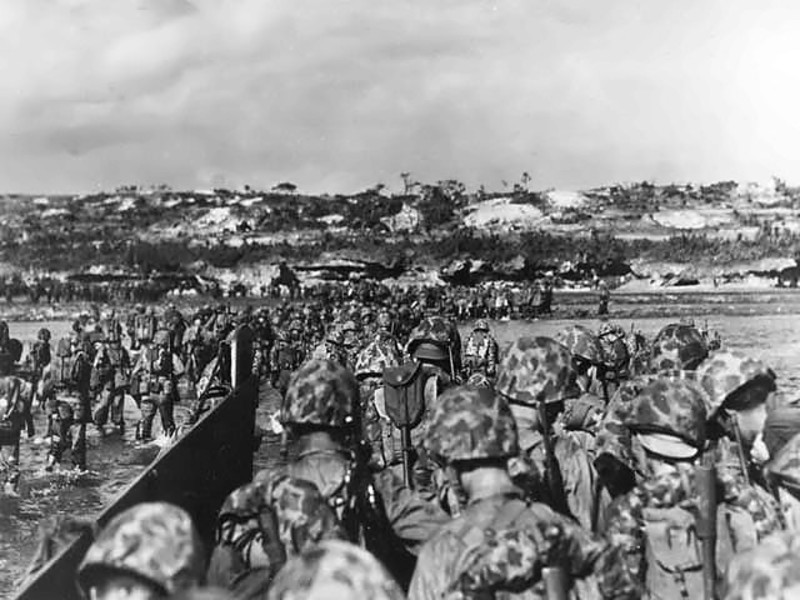 |
| Visual Source: Global Research In the essay, Manchester quotes General MacArthur who said, "Only the dead have seen the end of war." |
William Manchester was one of the many Marines who fought in Okinawa against the Japanese. He wrote this essay to provide a different perspective on war, and that wars, along with those that lost their lives in them, should be remembered. The essay starts by Manchester describing Flag Day, and the ceremony that will take place in Okinawa. He then talks about his experiences as a soldier, and jumps back and forth between these two topics. The author shares his deep, and probably not socially accepted, opinions that really allow his personality to bloom. When describing how wars have changed, he says, "By the time children have reached the age of awareness, they regard uniforms, decorations and Sousa marches as exalted, and those who argue otherwise are regarded as unpatriotic." In his opinion, being drafted into the war was seen as honorable and respectable, but now it's a horrible event that no one wants to talk about. Manchester writes with a formal tone, with almost no room for humor, which fits the topic. He is clearly traumatized by what happened, and his solemn tone proves that his experiences in war will stay with him forever. Manchester wanted to show his audience, which would be the general public, that some scars from war can never be healed. At the end of the essay, he states that he'll never be able to forgive the Japanese, and it supports his earlier comments about them. His images of war from his mind are transferred on the page through his vivid descriptions, and his occasional comments that do not fit the rest of his style make this essay an interesting read. For example, when describing some of the battle in Okinawa, he comments that "blood is sticky" after telling of his experience in walking through it. Machester's purpose is clearly shown in this essay because of his first-hand background and unique perspective on the battle of Okinawa, as well as war in general.
"Coatesville" by John Jay Chapman (1912)
 |
| Visual Source: Best Thinking History "A nation cannot practice a course of inhuman crime for three hundred years and then suddenly throw off the effects of it" -John Jay Chapman "Coatesville" |
A year prior to Chapman's essay being published, Coatesville, Pennsylvania housed one of the most horrifying murders. Hundreds of spectators looked on as a few white men tortuously killed a black man by burning him. The black man was chained to an iron bed and "thrust back by pitchforks when he struggled out of it." John Jay Chapman lived close to Coatesville and was furious when he learned of this horrible and unnecessary execution in the newspapers. This sparked his tirade because of the fact that none of the spectators intervened to try to cease the man's agony. He wanted to explain to people that even though slavery was abolished less than 50 years prior, racial tensions continued to be high, and black people were still not treated equal. His essay was for everyone of America because he believed they were all at fault for the man's burning. The Americans still treated them the same way as when they were slaves, and Chapman saw no use for this kind of behavior. John Jay wanted his audience to see the error of their ways and ultimately, the mistakes of the human race. It was really important to him to share that slavery makes all parties involved cruel and that it continued years after it was gone. He wrote several long sentences that ultimately showed he was ranting. This essay was a way to get his point across in a speech, and his diction displayed how frustrated he was that this happened. Another rhetorical device he used was imagery. When describing the scene of the man's burning, he used specific details that drew the reader into the essay. It helped to establish the writer's argument and provide countless evidence for it. Chapman wrote an essay that stood the test of time because of how these kinds of situations still occur in today's world, which made it very easy for him to accomplish his purpose.
Subscribe to:
Posts (Atom)