 |
| Visual Source: DIY Workouts "Any accounting of male-female differences must include the male's superior recklessness..." -John Updike "The Disposable Rocket" |
Sunday, August 30, 2015
"The Disposable Rocket" by John Updike (1993)

"Okinawa: The Bloodiest Battle Of All" by William Manchester (1987)
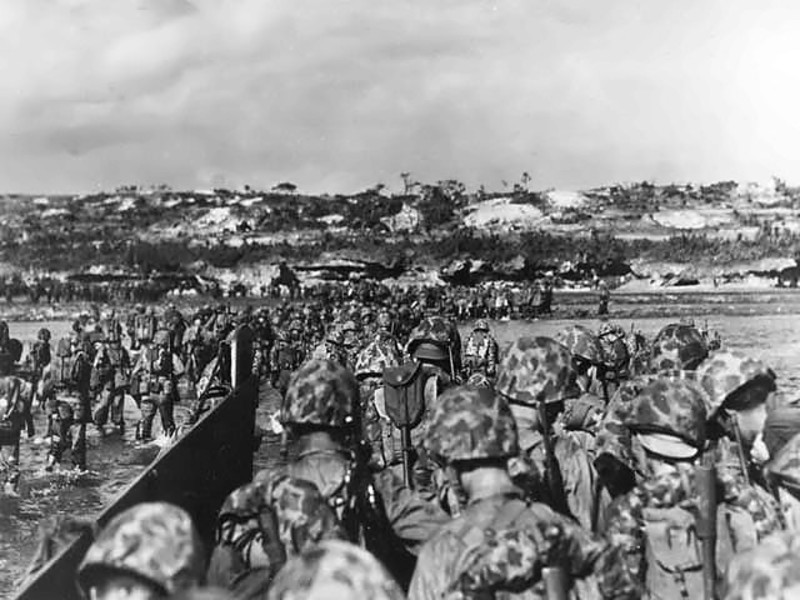 |
| Visual Source: Global Research In the essay, Manchester quotes General MacArthur who said, "Only the dead have seen the end of war." |
William Manchester was one of the many Marines who fought in Okinawa against the Japanese. He wrote this essay to provide a different perspective on war, and that wars, along with those that lost their lives in them, should be remembered. The essay starts by Manchester describing Flag Day, and the ceremony that will take place in Okinawa. He then talks about his experiences as a soldier, and jumps back and forth between these two topics. The author shares his deep, and probably not socially accepted, opinions that really allow his personality to bloom. When describing how wars have changed, he says, "By the time children have reached the age of awareness, they regard uniforms, decorations and Sousa marches as exalted, and those who argue otherwise are regarded as unpatriotic." In his opinion, being drafted into the war was seen as honorable and respectable, but now it's a horrible event that no one wants to talk about. Manchester writes with a formal tone, with almost no room for humor, which fits the topic. He is clearly traumatized by what happened, and his solemn tone proves that his experiences in war will stay with him forever. Manchester wanted to show his audience, which would be the general public, that some scars from war can never be healed. At the end of the essay, he states that he'll never be able to forgive the Japanese, and it supports his earlier comments about them. His images of war from his mind are transferred on the page through his vivid descriptions, and his occasional comments that do not fit the rest of his style make this essay an interesting read. For example, when describing some of the battle in Okinawa, he comments that "blood is sticky" after telling of his experience in walking through it. Machester's purpose is clearly shown in this essay because of his first-hand background and unique perspective on the battle of Okinawa, as well as war in general.
"Coatesville" by John Jay Chapman (1912)
 |
| Visual Source: Best Thinking History "A nation cannot practice a course of inhuman crime for three hundred years and then suddenly throw off the effects of it" -John Jay Chapman "Coatesville" |
A year prior to Chapman's essay being published, Coatesville, Pennsylvania housed one of the most horrifying murders. Hundreds of spectators looked on as a few white men tortuously killed a black man by burning him. The black man was chained to an iron bed and "thrust back by pitchforks when he struggled out of it." John Jay Chapman lived close to Coatesville and was furious when he learned of this horrible and unnecessary execution in the newspapers. This sparked his tirade because of the fact that none of the spectators intervened to try to cease the man's agony. He wanted to explain to people that even though slavery was abolished less than 50 years prior, racial tensions continued to be high, and black people were still not treated equal. His essay was for everyone of America because he believed they were all at fault for the man's burning. The Americans still treated them the same way as when they were slaves, and Chapman saw no use for this kind of behavior. John Jay wanted his audience to see the error of their ways and ultimately, the mistakes of the human race. It was really important to him to share that slavery makes all parties involved cruel and that it continued years after it was gone. He wrote several long sentences that ultimately showed he was ranting. This essay was a way to get his point across in a speech, and his diction displayed how frustrated he was that this happened. Another rhetorical device he used was imagery. When describing the scene of the man's burning, he used specific details that drew the reader into the essay. It helped to establish the writer's argument and provide countless evidence for it. Chapman wrote an essay that stood the test of time because of how these kinds of situations still occur in today's world, which made it very easy for him to accomplish his purpose.
Subscribe to:
Posts (Atom)